
Supporting startups, promoting entrepreneurial education, and creating an environment where good ideas can grow into successful companies were the key messages of an evening that brought together world-renowned scientists and representatives of Serbia’s business community.
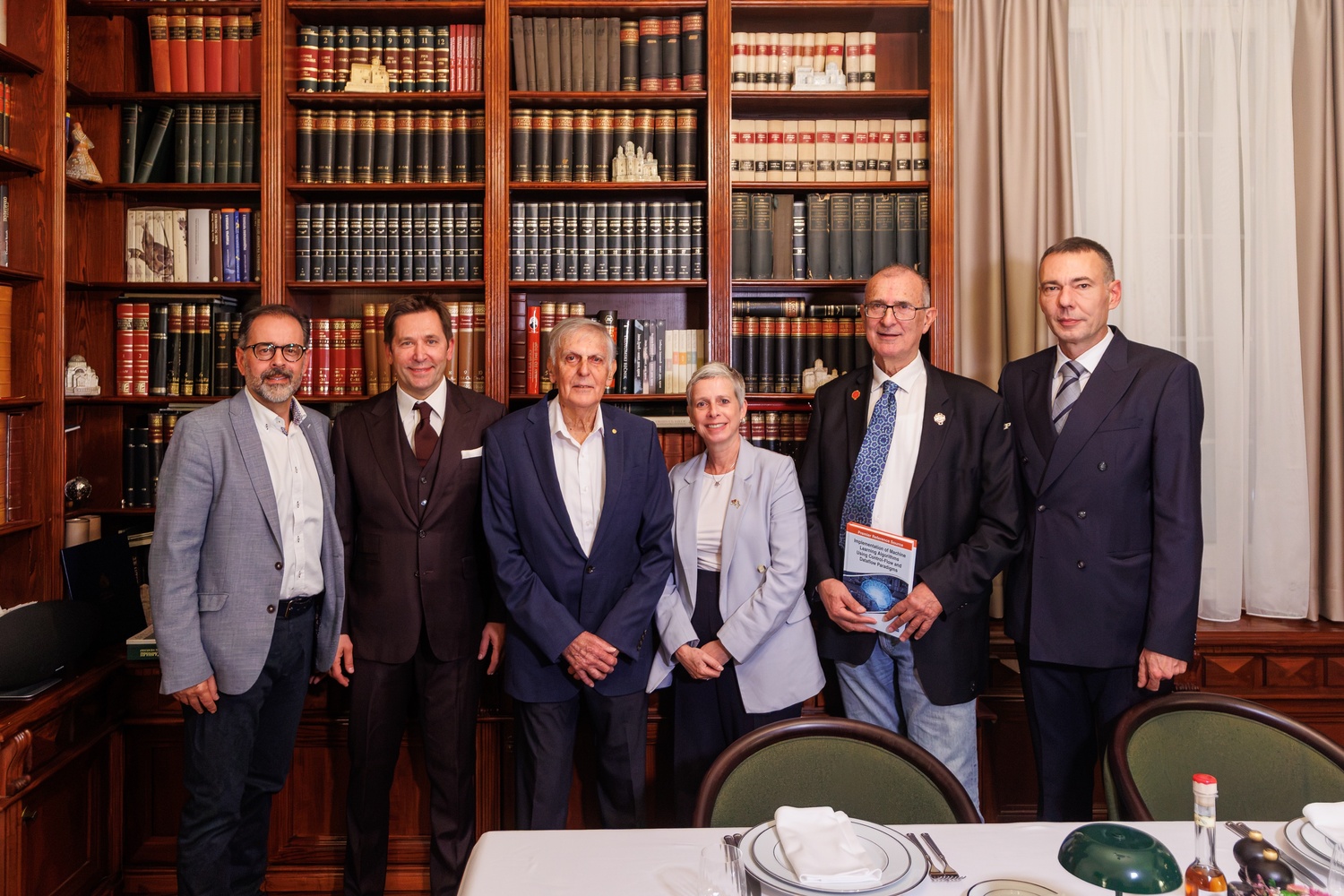
Organized by Serbian Business Club Privrednik and East West Bridge (EWB), the event took place on November 2, 2026, and focused on the role of knowledge, education, and innovation in economic development.
The evening welcomed two distinguished guests: Professor Dan Shechtman, recipient of the 2011 Nobel Prize in Chemistry, and Professor Veljko Milutinović, an internationally recognized scientist and expert in information technology. Among those attending were H.E. Avivit Bar-Ilan, Ambassador of the State of Israel to the Republic of Serbia, and H.E. Nebojša Đoković, Ambassador of Montenegro to the Republic of Serbia, alongside representatives of the business and academic communities, scientists, researchers, and young entrepreneurs.
The discussion opened one of the most important questions facing the future of Serbia’s economy: how can we create an environment in which young people do not simply look for jobs, but have the knowledge, support, and confidence to start businesses of their own?
Education that fosters entrepreneurship
Professor Veljko Milutinović shared insights from Purdue University and Indiana University in the United States, exploring how universities can bring science, education, and business closer together. His presentation, titled “How America Turns Knowledge into Money: The Purdue/IU Model and an Opportunity for Serbia”, highlighted the potential of this approach.
One of the evening’s central messages was the need for education systems to go beyond training skilled professionals and managers. They should also equip people to recognize business opportunities, launch their own ventures, and build new companies.
Knowledge should not simply serve as the foundation for a professional career within existing business structures. It should also drive the development of new products, technologies, jobs, and economic value.
Achieving this requires closer links between education and practical experience, greater encouragement of creativity, the development of entrepreneurial skills, and an environment that gives young people the confidence to turn their ideas into viable business ventures.
Supporting startups as an investment in the future
The highlight of the evening was Professor Dan Shechtman’s lecture, “Small Country, Big Ideas: Israel’s Entrepreneurship Model and the Opportunity for Serbia.”
Professor Shechtman presented Israel’s experience, showing how the country has built one of the world’s most developed entrepreneurial ecosystems through sustained investment in education, science, and innovation.
Particular attention was given to Israel’s system of institutional and financial support for startups, through which the government uses specialized mechanisms to identify and support innovative business ideas.
At the heart of this model is the opportunity for young entrepreneurs to develop their ideas and test them in the marketplace without the fear that failure will permanently discourage them or prevent them from trying again.
Professor Shechtman emphasized that financial support alone is not enough to foster entrepreneurship. Equally important are a culture of open communication, a willingness to collaborate, and a social environment that encourages initiative and recognizes failure as a natural part of the innovation process.
Israel’s experience demonstrates that a country’s economic potential is not necessarily determined by its size or natural resources, but rather by its ability to develop human capital and support the creation of new businesses.
The Privrednik Club’s role in connecting generations
For Serbian Business Club Privrednik, which brings together representatives of successful Serbian companies, events of this kind are particularly valuable.
Through the establishment of its Young Business Leaders Club, Privrednik has already taken an important step towards connecting a new generation of entrepreneurs with the experience and expertise of established business leaders.
Exchanging knowledge and experience, providing mentorship, building connections with the scientific community, and learning from successful international models can all help create a more supportive environment for developing new business ideas.
The evening with the Nobel Laureate once again brought a question to the forefront that deserves the attention of society as a whole: how can we educate future generations not only to successfully manage companies, but also to give them the skills, confidence, and support they need to build businesses of their own?
After all, the strength of an economy is measured not only by the success of the companies operating today, but also by its ability to create the companies that will shape tomorrow.
Serbian Business Club Privrednik will continue to encourage dialogue between the business community, academia, and younger generations, firmly believing that knowledge, entrepreneurial initiative, and collaboration across generations are the foundations of Serbia’s long-term economic development.
See more photos at the link

As part of the 21st World Congress of Economists, one of the world’s leading international gatherings…
Learn more
Privrednik Club hosted an exclusive VIP reception as part of the international Horizons Sustainability and Connectivity…
Learn more